Home / Sacred Geometry / Golden ratio
The Golden Ratio: Fact, Myth and Mathematics
φ is a genuinely remarkable number. It is also the subject of more confident nonsense than almost any other piece of mathematics.
The definition
Split a line into two parts so that the whole is to the longer part as the longer part is to the shorter. That ratio is φ = (1 + √5) / 2 ≈ 1.6180339… It satisfies φ² = φ + 1, it is the limit of the ratios of consecutive Fibonacci numbers, and it governs the regular pentagon, whose diagonal is φ times its side.
Where it really appears
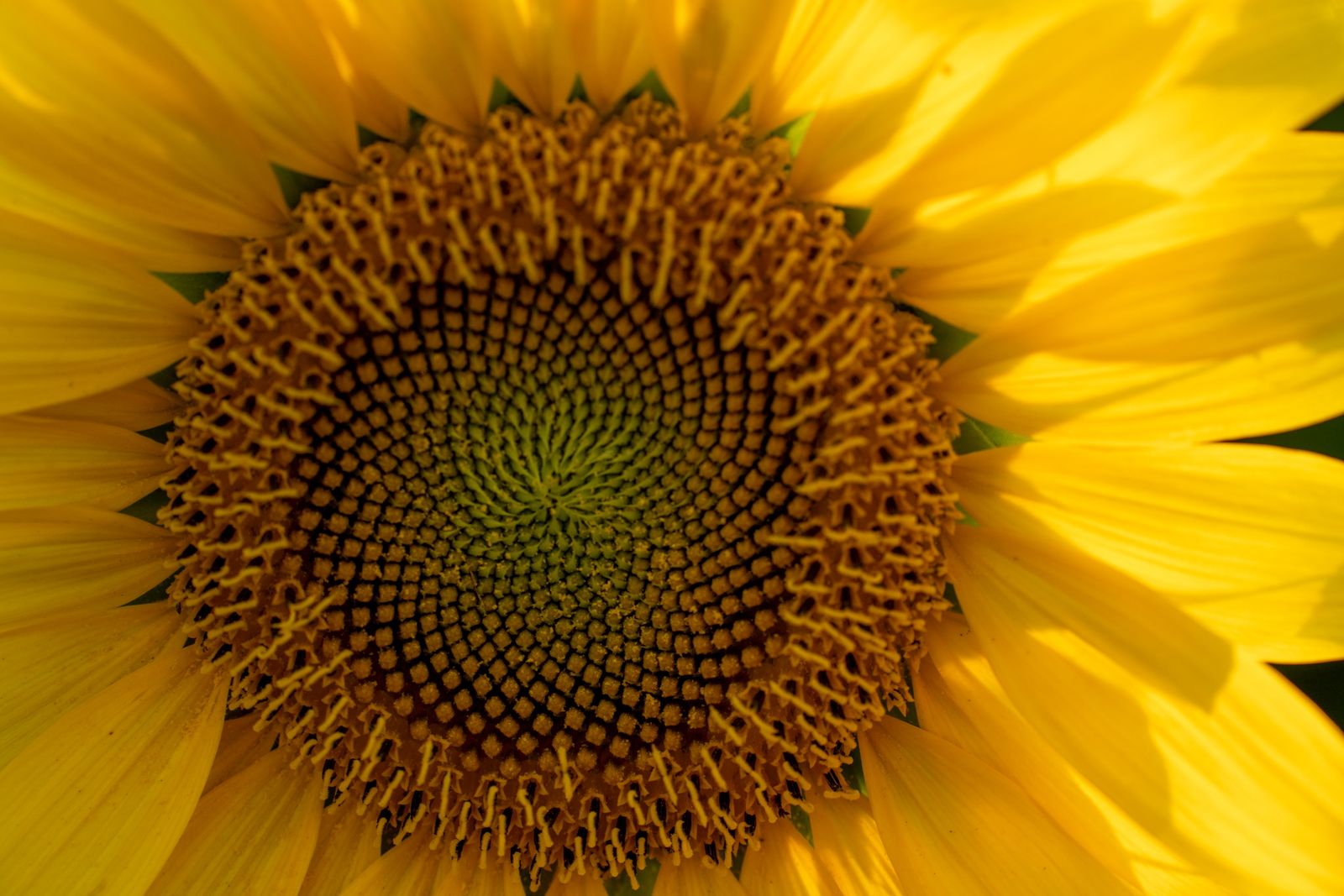
Established In many plants, new leaves or seeds form at an angle of about 137.5° from the previous one, the “golden angle” derived from φ. This packs them efficiently and produces the interlocking spirals of sunflowers, pine cones and pineapples, often in consecutive Fibonacci numbers such as 34 and 55.
Where the claims fall apart
| Claim | Verdict |
|---|---|
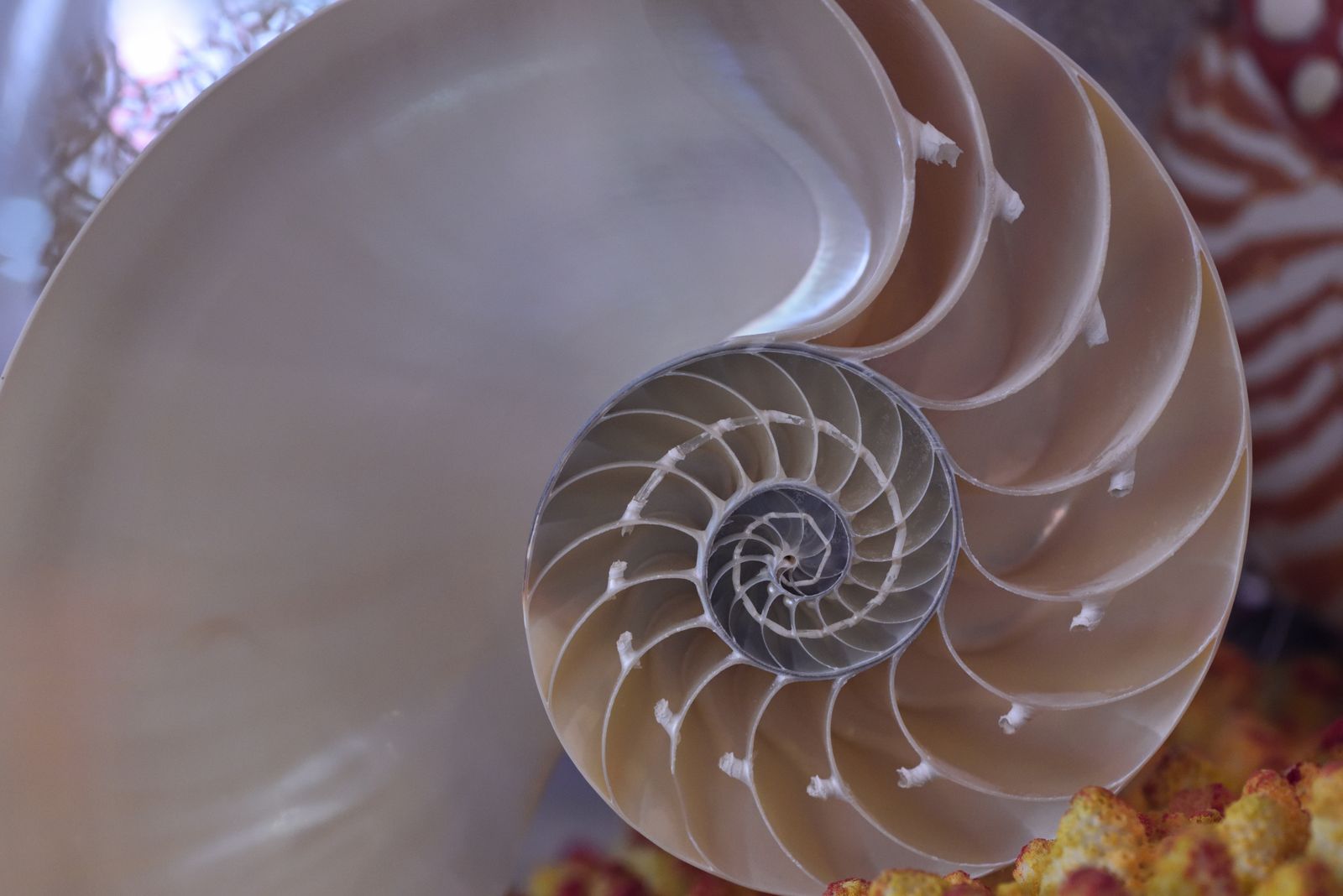
| The nautilus shell is a golden spiral | Not supported It is a logarithmic spiral, but its growth ratio is generally not φ. |
| The Parthenon was designed on φ | Debated No ancient source says so; fits depend on which points are measured. |
| The Mona Lisa and other masterpieces encode φ | Debated Usually shown by drawing rectangles after the fact. |
| Beautiful faces follow golden proportions | Not supported Studies do not find a reliable link. |
| People prefer golden rectangles | Debated Results since Fechner (1876) are inconsistent. |
Why we see it everywhere
Many ratios in nature and design fall somewhere between 1.5 and 1.7. With enough freedom to choose endpoints and tolerances, φ can be “found” almost anywhere. That is a lesson about pattern-seeking minds as much as about mathematics. See also the mathematics of sacred geometry.
Sources
- Markowsky, G. (1992). Misconceptions about the golden ratio. The College Mathematics Journal, 23(1).
- Livio, M. (2002). The Golden Ratio. Broadway Books.
- Euclid, Elements, Book VI, Definition 3.