Home / Mind & brain / Blindsight
Blindsight: Seeing Without Knowing You See
Some people who are blind after damage to the visual cortex can still point to, avoid or respond to things they insist they cannot see. Blindsight is one of the clearest windows neuroscience has on the gap between processing information and being aware of it, and researchers still argue about what exactly it shows.
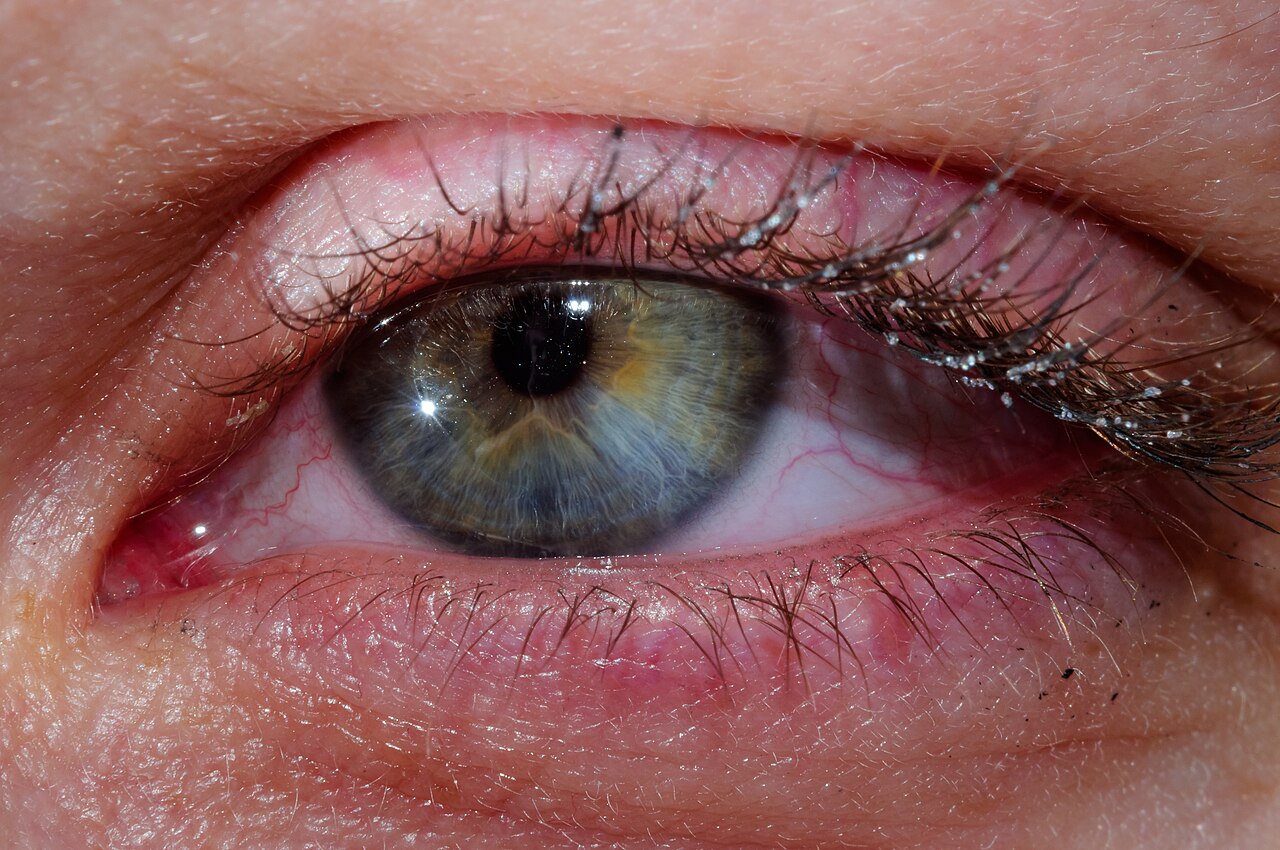
- Blindsight is the ability of some people with damage to the primary visual cortex (V1) to respond above chance to stimuli in a part of the visual field where they report seeing nothing.
- The basic phenomenon is well replicated in patients, in monkeys with V1 lesions and, in milder forms, in healthy volunteers.
- It is thought to rely on visual pathways that bypass V1, including routes through the lateral geniculate nucleus, the superior colliculus and the pulvinar.
- Whether blindsight is fully unconscious or a faint, degraded form of conscious vision is an active scientific debate.
- Blindsight depends on light entering the eyes. It is not a “sixth sense” and offers no support for extrasensory perception.
What blindsight is
Most of what reaches the eyes is relayed through the lateral geniculate nucleus of the thalamus to the primary visual cortex, V1, at the back of the brain. When V1 on one side is destroyed, usually by a stroke, a tumour or surgery, people typically lose conscious vision in the opposite half of their visual field, a condition called hemianopia. Ask them what they see on that side and they will say, honestly, that they see nothing.
Blindsight is what happens when researchers refuse to take that answer as the whole story. If patients are asked to guess, in a forced-choice test, whether a light appeared, where it was, which way a line was tilted or which way something moved, some of them guess correctly far more often than chance, sometimes at rates above 90 per cent, while still insisting that they are guessing Established. The term was coined by the Oxford neuropsychologist Lawrence Weiskrantz and his colleagues in 1974 to capture this apparent paradox: visual performance without visual experience.
Not every person with V1 damage shows blindsight, and abilities vary widely between individuals. Much of what we know comes from a small number of intensively studied patients, which is a real limitation of the evidence.
How it was discovered
Hints came early. In 1917 the British neurologist George Riddoch described First World War soldiers with gunshot wounds to the occipital lobe who could perceive movement in otherwise blind parts of their visual field, an effect still known as the Riddoch phenomenon. In 1973 Ernst Pöppel, Richard Held and Douglas Frost reported in Nature that war veterans with similar injuries tended to move their eyes towards lights flashed in their blind fields, even though they could not see them.
The decisive studies were carried out with a patient known as DB. Surgery to remove an abnormal tangle of blood vessels from his right occipital lobe left him without conscious vision in much of his left visual field. Weiskrantz, Elizabeth Warrington, Marion Sanders and John Marshall found that DB could nonetheless locate targets, tell horizontal from vertical lines and distinguish an X from an O in that field, while describing his answers as guesses. Later work focused on another patient, GY, whose V1 on one side was damaged in a road accident in childhood and who took part in hundreds of experiments over several decades.
What blindsight patients can do
Across studies, people with blindsight have shown above-chance performance in a range of tasks presented to their blind field Established:
- Detection and location: saying whether a stimulus appeared and pointing or looking towards it.
- Motion and orientation: judging the direction of movement or the tilt of a line or grating.
- Emotional expressions: in what is called affective blindsight, Beatrice de Gelder and colleagues reported in 1999 that GY could discriminate facial expressions he did not consciously see.
- Navigation: in 2008 de Gelder and colleagues described a patient, TN, left without any functioning V1 after two strokes, who walked down a cluttered corridor and stepped around every obstacle, although he considered himself completely blind.
Weiskrantz also distinguished two kinds of experience. In what he called type 1 blindsight, patients report no awareness at all. In type 2, they report a vague feeling that “something happened”, often linked to fast or high-contrast stimuli, without anything they would describe as seeing. That distinction already hints at the central controversy.
How it works in the brain
If V1 is destroyed, how does visual information reach the rest of the brain? The retina sends signals along several routes, not just the main one through V1. Three candidates have attracted most attention:
- a route from the retina to the superior colliculus, a midbrain structure involved in orienting the eyes and head, and from there to the pulvinar of the thalamus and on to higher visual areas;
- direct connections from the lateral geniculate nucleus to motion-sensitive area MT (also called V5) and other extrastriate areas, bypassing V1;
- pathways to the amygdala, which have been proposed to support affective blindsight.
Animal work has helped to test these ideas. In 1995 Alan Cowey and Petra Stoerig showed that monkeys with V1 removed on one side could accurately locate targets in their affected field, yet when given the option to report “no light”, they classified those same targets as blanks, a pattern strikingly similar to human blindsight. In 2010 Michael Schmid and colleagues reported in Nature that temporarily inactivating the lateral geniculate nucleus in monkeys with V1 lesions abolished both their blindsight detection and the responses of extrastriate cortex, suggesting that the LGN route is essential at least for the abilities they tested Established (in monkeys). How much each pathway contributes in humans, and whether different abilities use different routes, is still being worked out Debated.
Truly unconscious, or degraded vision?
The most famous reading of blindsight is that it demonstrates sophisticated visual processing in the complete absence of visual experience. That reading has always had critics. In 1983 John Campion, Richard Latto and Yvonne Smith argued in Behavioral and Brain Sciences that some early results could be explained by light scattering into intact parts of the visual field, or by small islands of spared cortex. Later studies controlled more carefully for these factors, and the basic phenomenon survived, but the questions about awareness did not go away.
Two lines of evidence keep the debate alive. First, the way awareness is measured matters. In 2008 Morten Overgaard and colleagues tested a blindsight patient with a four-point Perceptual Awareness Scale instead of a simple yes/no question and found that correct responses were usually accompanied by reports of at least a weak, unclear experience. Second, people differ in how willing they are to say “I saw something”. A patient who sets a very strict criterion for reporting vision may perform well while denying awareness, even if some faint experience is present.
The philosopher Ian Phillips developed this point in a 2021 paper in Psychological Review, arguing that blindsight is best understood as qualitatively degraded conscious vision rather than vision without consciousness. Other researchers replied that signal detection analyses do not rule out genuinely unconscious processing, and that patients’ reports should not simply be overridden. Brain-imaging work on GY by Arash Sahraie and colleagues (1997) also found different patterns of activity when he reported awareness and when he did not, which some take as evidence that the two modes really differ. The fairest summary is that the behavioural phenomenon is solid, while its interpretation as wholly unconscious vision is contested Debated.
Why theories of consciousness care
Blindsight matters because it appears to separate two things that normally go together: a brain using visual information to guide behaviour, and a person having a visual experience. That makes it a test case for almost every theory.
- Global Workspace Theory interprets blindsight as local processing that never gets “broadcast” widely enough to become available for report and flexible use.
- Higher-order theories hold that a state is conscious when the brain represents itself as being in it. Hakwan Lau and Richard Passingham (2006) produced “relative blindsight” in healthy volunteers using visual masking: performance was matched across conditions, yet awareness differed, and the difference was linked to activity in the dorsolateral prefrontal cortex.
- Integrated Information Theory would explain blindsight in terms of which brain structures contribute to a highly integrated system, and which process signals in a more feed-forward, isolated way.
Blindsight-like effects have also been produced in people with healthy brains. In 2005 Jason Boyer, Susan Harrison and Tony Ro used transcranial magnetic stimulation over V1 to suppress conscious perception and found that participants could still discriminate the orientation and colour of stimuli above chance. Such studies extend the phenomenon beyond a few patients, though they raise their own questions about how completely awareness is removed. Like the cases discussed in our pages on split-brain patients and anaesthesia, blindsight shows that consciousness can come apart from functions we usually assume require it. It does not, by itself, solve the hard problem of consciousness: knowing which processes are unconscious still leaves open why the others feel like anything.
There is also a clinical thread. Krystel Huxlin and colleagues reported in 2009 that intensive visual training in the blind field improved motion discrimination in some people with V1 damage. This is an active research area rather than a standard treatment, and anyone with vision loss after a stroke or brain injury should seek advice from a neurologist, ophthalmologist or orthoptist.
What blindsight does not show
Because the name sounds mysterious, blindsight is sometimes recruited for claims it cannot support. It is occasionally presented as proof of a “sixth sense”, a “third eye”, intuition that sees through closed eyelids, or a quantum mind that perceives without the senses. None of this follows from the research Not supported. Blindsight requires light to reach the retina; stimuli are presented to open, working eyes, and the abilities disappear when there is no visual input. What it reveals is not a new sense but how much ordinary visual processing goes on without reaching awareness. For how we grade such claims, see the Evidence Meter.
Evidence Meter
| Claim | Grade |
|---|---|
| Some people with V1 damage respond above chance to stimuli they report not seeing | Established |
| Monkeys with V1 lesions show a comparable pattern, and the LGN is needed for it | Established |
| Which pathways support each blindsight ability in humans | Debated |
| Blindsight is completely unconscious vision | Debated |
| Blind-field training can restore useful vision in everyone with V1 damage | Not supported |
| Blindsight is evidence for a sixth sense or extrasensory perception | Not supported |
This page explains research findings and is not medical advice. If you notice sudden loss of vision, seek emergency medical care; for lasting vision loss after a stroke or brain injury, ask your doctor about assessment by an eye or neurology specialist.
FAQ
Is blindsight real?
Yes. The core finding, above-chance responses to stimuli in a field patients describe as blind, has been replicated in many patients, in monkeys and in healthy volunteers under special conditions. What remains disputed is whether patients have no experience at all or a faint, degraded one.
Can anyone develop blindsight?
Blindsight in the strict sense occurs after damage to the primary visual cortex, not after damage to the eyes or optic nerve. Healthy people can show related effects in laboratory tasks that use masking or magnetic stimulation to suppress awareness of a stimulus.
Do blindsight patients know they are responding to something?
Often they feel they are guessing. Some report nothing at all; others describe a vague sense that something happened without anything they would call seeing. These differences are central to the scientific debate.
Is blindsight the same as intuition or a sixth sense?
No. Blindsight depends on light entering the eyes and being processed by visual pathways that bypass V1. It provides no evidence for perception without the senses.
Sources
- Riddoch, G. (1917). Dissociation of visual perceptions due to occipital injuries, with especial reference to appreciation of movement. Brain, 40(1).
- Pöppel, E., Held, R. & Frost, D. (1973). Residual visual function after brain wounds involving the central visual pathways in man. Nature, 243.
- Weiskrantz, L., Warrington, E. K., Sanders, M. D. & Marshall, J. (1974). Visual capacity in the hemianopic field following a restricted occipital ablation. Brain, 97(4).
- Campion, J., Latto, R. & Smith, Y. M. (1983). Is blindsight an effect of scattered light, spared cortex, and near-threshold vision? Behavioral and Brain Sciences, 6(3).
- Weiskrantz, L. (1986). Blindsight: A Case Study and Implications. Oxford University Press.
- Cowey, A. & Stoerig, P. (1995). Blindsight in monkeys. Nature, 373.
- Sahraie, A. et al. (1997). Pattern of neuronal activity associated with conscious and unconscious processing of visual signals. PNAS, 94(17).
- de Gelder, B., Vroomen, J., Pourtois, G. & Weiskrantz, L. (1999). Non-conscious recognition of affect in the absence of striate cortex. NeuroReport, 10(18).
- Boyer, J. L., Harrison, S. & Ro, T. (2005). Unconscious processing of orientation and color without primary visual cortex. PNAS, 102(46).
- Lau, H. C. & Passingham, R. E. (2006). Relative blindsight in normal observers and the neural correlate of visual consciousness. PNAS, 103(49).
- Overgaard, M., Fehl, K., Mouridsen, K., Bergholt, B. & Cleeremans, A. (2008). Seeing without seeing? Degraded conscious vision in a blindsight patient. PLoS ONE, 3(8).
- de Gelder, B. et al. (2008). Intact navigation skills after bilateral loss of striate cortex. Current Biology, 18(24).
- Huxlin, K. R. et al. (2009). Perceptual relearning of complex visual motion after V1 damage in humans. Journal of Neuroscience, 29(13).
- Schmid, M. C. et al. (2010). Blindsight depends on the lateral geniculate nucleus. Nature, 466.
- Phillips, I. (2021). Blindsight is qualitatively degraded conscious vision. Psychological Review, 128(3).