Home / Altered states / Anaesthesia
Anaesthesia and Consciousness: What “Going Under” Reveals About the Mind
Every day, hundreds of thousands of people have their consciousness switched off and back on by general anaesthesia. Medicine does this safely and routinely, yet exactly how it works is still a live scientific question, and one of the best windows we have on what consciousness is.
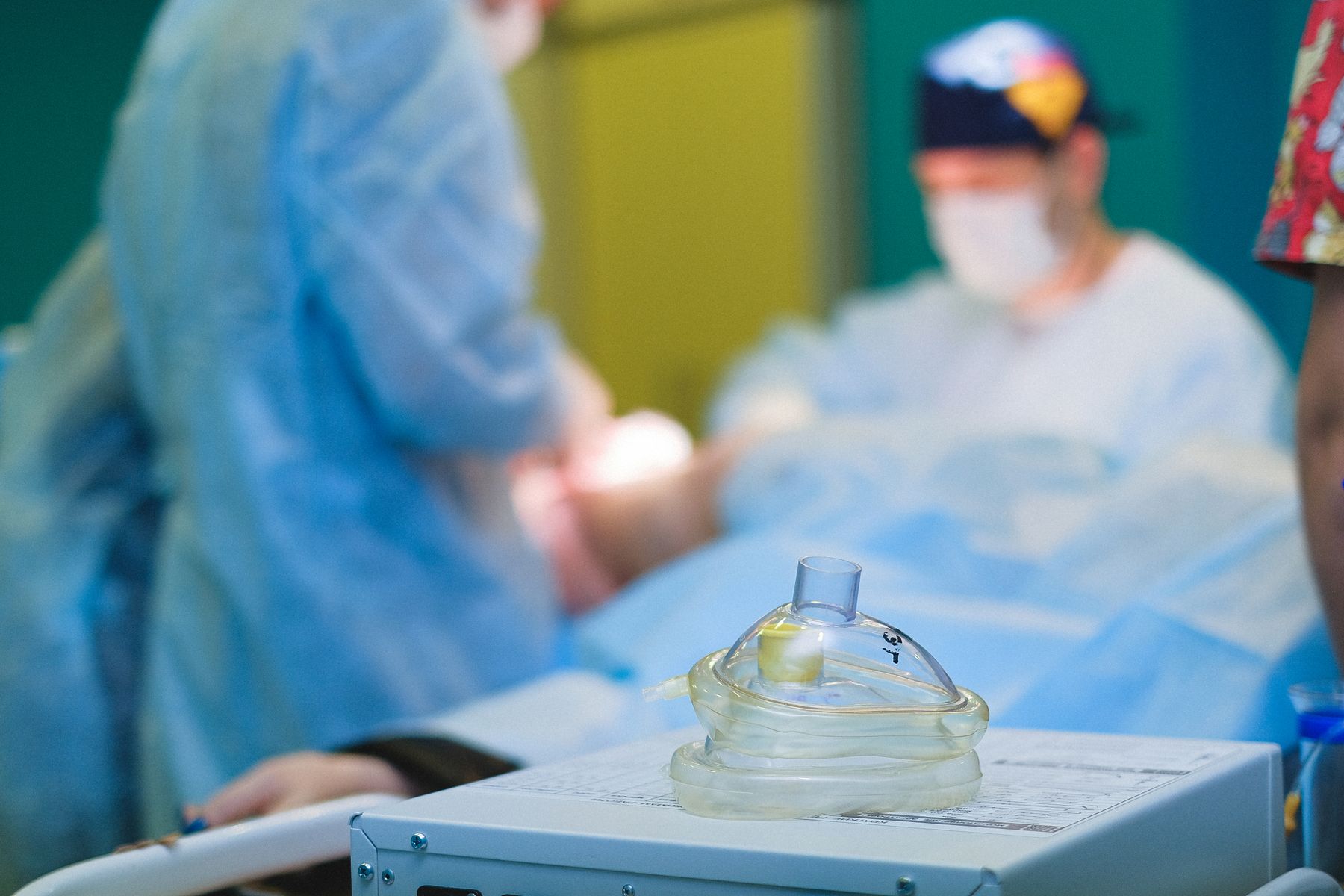
- General anaesthetics act mainly on proteins in nerve cells, especially receptors such as GABAA and NMDA, but chemically different drugs end in a similar loss of consciousness.
- What they share is a breakdown in large-scale communication and complexity across the cortex, which can be measured with brain stimulation and EEG.
- Not responding is not the same as not experiencing: studies with the isolated forearm technique show that a minority of patients can follow commands during anaesthesia, usually without later memory of it.
- Quantum explanations, including the microtubule hypothesis of Orch OR, remain speculative and are not part of the mainstream account.
Health note: this page is educational. It describes research on general anaesthesia and consciousness and is not medical advice. Questions about a specific operation or anaesthetic belong with your anaesthetist or surgical team.
What general anaesthesia does
Clinically, general anaesthesia (spelled anesthesia in American English) is a drug-induced, reversible state that combines several components: unconsciousness, amnesia (no memory formed), analgesia (no response to pain) and, often, immobility. In practice these components are produced by a combination of drugs: a hypnotic agent such as propofol or a volatile gas like sevoflurane, an opioid for pain, and sometimes a muscle relaxant.
For consciousness science, the striking part is the first component. Within a minute of a propofol injection, a person who was talking stops having, as far as we can tell, any experience at all. A few hours later the same person wakes up and reports that no time seems to have passed. Unlike sleep, this can be controlled precisely, repeated, and dosed up or down. That is why researchers such as Michael Alkire, Anthony Hudetz, Giulio Tononi, Emery Brown and George Mashour have argued that anaesthesia is one of the most powerful experimental tools for studying the neural basis of consciousness, alongside sleep and the other altered states of consciousness.
From ether to receptors: a short history
On 16 October 1846, at the Massachusetts General Hospital in Boston, the dentist William T. G. Morton gave ether to a patient while a surgeon removed a tumour from his neck. The public demonstration, in a room now known as the Ether Dome, launched modern surgical anaesthesia. Chloroform and nitrous oxide soon followed. For decades, though, nobody knew how these very different substances worked.
Around 1900, Hans Horst Meyer and Charles Ernest Overton independently noticed that the potency of anaesthetics tracked how well they dissolve in olive oil. This Meyer–Overton correlation suggested that anaesthetics act by dissolving in the fatty membranes of nerve cells, and the “lipid theory” dominated for most of the twentieth century. In 1984, Nicholas Franks and William Lieb showed in Nature that anaesthetics could inhibit a purely protein target (the firefly enzyme luciferase) with the same potency ranking, shifting attention to proteins. Today the consensus is that anaesthetics bind to specific pockets in membrane proteins, above all ion channels and receptors that control neuronal excitability.
One state, many drugs
The modern molecular picture is Established in its main lines, though details are still being refined:
| Agent | Main molecular target | Typical experience |
|---|---|---|
| Propofol, etomidate, barbiturates | Enhance GABAA receptors (the brain’s main inhibitory channel) | Rapid, dreamless loss of consciousness |
| Sevoflurane, isoflurane (volatile gases) | Several targets, including GABAA receptors and potassium channels | Loss of consciousness, usually without recall |
| Ketamine | Blocks NMDA glutamate receptors | “Dissociative” state; vivid dreams or hallucinations are common |
| Xenon, nitrous oxide | Block NMDA receptors (among other effects) | Loss of consciousness at high enough concentration |
| Dexmedetomidine | Activates α2-adrenergic receptors | Sedation resembling natural sleep; patients can often be roused |
This diversity is itself a clue. If chemically unrelated drugs acting on different receptors all end in the same outcome, the shared step is probably not a single molecule but something that happens at the level of brain networks. Ketamine is especially instructive: patients become unresponsive, yet many later report vivid experiences, which suggests that what disappears with propofol is not simply “brain activity” but a particular kind of organised activity.
What changes in the brain
Anaesthesia does not turn the brain off. Neurons keep firing and the cortex still responds to sounds and touch at an early, local level. What changes is how regions talk to each other. Several converging findings are now well replicated:
Loss of integration and complexity
In 2010 Fabio Ferrarelli, Marcello Massimini and colleagues stimulated the cortex with brief magnetic pulses (transcranial magnetic stimulation, TMS) while recording EEG. In awake volunteers, a pulse set off a complex wave of activity that spread across many regions. Under midazolam anaesthesia, the same pulse produced a strong but brief, local response, like a stone dropped into mud instead of water. From this approach came the perturbational complexity index (PCI), which measures how integrated and differentiated the brain’s response is. In large validation studies it separated conscious from unconscious conditions across sleep, anaesthesia and brain injury, using an empirically derived cut-off.
A 2015 study by Simone Sarasso and colleagues compared three drugs. PCI fell to low values with propofol and xenon, where volunteers reported no experience on waking, but stayed high with ketamine, where volunteers reported long, vivid dreams. In other words, the index tracked experience rather than responsiveness.
Disrupted communication between regions
Imaging and EEG studies show that loss of consciousness under several anaesthetics is associated with reduced communication between frontal and parietal regions, and with changes in the loops between thalamus and cortex. With propofol, the EEG develops characteristic slow waves and a strong alpha rhythm concentrated over the front of the head, described in detail by Patrick Purdon, Emery Brown and colleagues in 2013. Anaesthetists increasingly use these EEG signatures to monitor depth of anaesthesia.
Waking up is not just the reverse
Emergence is not simply the drug wearing off. Animal studies show that the brain resists transitions in both directions (a phenomenon called “neural inertia”), and that stimulating arousal systems, for example with dopamine-boosting drugs in rats, can actively speed recovery. This suggests that consciousness depends on actively maintained brain states, not just on the absence of a drug.
Unresponsive is not the same as unconscious
Most of the time we judge consciousness by behaviour: a person who does not respond is assumed to experience nothing. Anaesthesia research has shown that this assumption can fail. Researchers now distinguish three situations: being connected (conscious and aware of the environment), disconnected (having experiences, such as dreams, that are cut off from the outside world) and unconscious (no experience at all).
The isolated forearm technique, first described by Ian Tunstall in 1977, makes this measurable. A tourniquet on one arm stops muscle relaxant from reaching the hand, so the patient can still squeeze when asked. In a 2017 international study in Anesthesiology led by Robert Sanders, 12 of 260 patients (4.6%) squeezed on command shortly after intubation, and none of those questioned afterwards had explicit memory of it. A 2023 study in the British Journal of Anaesthesia focusing on adults aged 18 to 40 found such “connected consciousness” in 11% of patients (37 of 338), more often in women than in men.
These responses usually occur in a brief, lighter phase around intubation and are not the same as the rare and distressing experience of accidental awareness with recall. The United Kingdom’s Fifth National Audit Project (NAP5), published in 2014, estimated that about 1 in 19,000 general anaesthetics led to a spontaneous report of awareness, while earlier studies that questioned patients systematically found higher rates, in the order of 1 to 2 per 1,000. The research has practical consequences, such as better depth monitoring and attention to patients at higher risk, and a philosophical one: behaviour is an imperfect guide to experience, a point that also matters for patients with disorders of consciousness and for debates about near-death experiences during cardiac arrest.
A test bed for theories of consciousness
Because anaesthesia can be dialled up and down, it is used to test the leading scientific theories. Each reads the data in its own way Debated:
- Global Workspace Theory emphasises the loss of long-range “ignition” and broadcasting between frontal and parietal cortex. Anaesthesia studies showing disrupted frontoparietal communication fit this view.
- Integrated Information Theory predicts that consciousness fades when the brain’s capacity to integrate information collapses. The PCI results, inspired by IIT, are often cited in its support, although PCI does not measure IIT’s quantity Φ directly.
- Thalamocortical and cognitive-unbinding accounts emphasise disruption in loops between the thalamus and cortex or in the binding of information across regions.
The difficulty is that anaesthetics change many things at once, so the same result can often be read as support for several theories. Whether anaesthesia acts mainly on “front” or “back” regions of the cortex is part of the same dispute explored in the adversarial test of IIT and Global Workspace Theory. None of these theories, it should be stressed, closes the hard problem of consciousness: they aim to identify which brain states go with experience, not why those states feel like anything.
The quantum hypotheses
Anaesthesia also plays a central role in quantum theories of mind. The anaesthesiologist Stuart Hameroff, co-author with Roger Penrose of Orch OR, has long argued that anaesthetics act on microtubules inside neurons, where he proposes that quantum processes underlie consciousness. Some experiments are cited in support: anaesthetics can bind to tubulin, and a 2024 rat study published in eNeuro reported that a microtubule-stabilising drug, epothilone B, delayed loss of the righting reflex under isoflurane by roughly a minute. Other studies have explored spin effects: a 2014 paper in PNAS by Luca Turin and colleagues reported changes in electron spin in fruit flies exposed to anaesthetics, and a 2018 mouse study in Anesthesiology reported that xenon isotopes with nuclear spin were less potent anaesthetics than those without.
These are genuine published findings, but their interpretation is contested and they have not been widely replicated. The microtubule results show at most that microtubules are involved in the cascade, which is unsurprising given their role in every neuron, not that consciousness is quantum. The isotope result is intriguing but could have non-quantum explanations. Meanwhile the receptor-based, network-level account explains a great deal of clinical and experimental data without invoking quantum effects. For the wider debate, see microtubules and consciousness and is consciousness quantum?; for real, established quantum effects in living systems, see quantum biology.
Evidence Meter
| Claim | Grade |
|---|---|
| General anaesthetics act mainly on specific neuronal proteins such as GABAA and NMDA receptors | Established |
| Loss of consciousness under anaesthesia goes with reduced cortical integration and complexity | Established |
| Some patients can respond to commands during anaesthesia without later recall | Established |
| Which brain regions or loops are the decisive “switch” for consciousness | Debated |
| Anaesthesia data favour one particular theory of consciousness | Debated |
| Anaesthetics work by blocking quantum processes in microtubules | Speculative |
How to read headlines about “the off switch for consciousness”: ask which drug was used (ketamine and propofol behave very differently), whether consciousness was measured by behaviour alone, and whether the result has been replicated in humans. How we grade claims: see the Evidence Meter.
FAQ
Is general anaesthesia the same as deep sleep?
No. Both involve loss of responsiveness and share some EEG features, such as slow waves, but anaesthesia is drug-induced, much deeper and not reversed by ordinary stimulation. Some sedatives, such as dexmedetomidine, produce states closer to natural sleep than others.
Do you dream under anaesthesia?
Sometimes. Dream-like experiences are reported most often with ketamine and during the lighter phases of going under or waking up. With drugs such as propofol, most people report no experience at all, and research suggests that in many cases there is genuinely none.
Do scientists really not know how anaesthesia works?
They know a great deal about which molecules anaesthetics bind to and which brain networks are disrupted. What remains open is the exact chain from those molecular effects to the loss of experience, because that depends on unresolved questions about how the brain produces consciousness in the first place.
Does anaesthesia prove that consciousness is quantum?
No. A few studies are cited in support of quantum or microtubule-based theories, but they are not widely replicated and have other possible explanations. The mainstream account, based on receptors and network communication, does not require quantum effects.
Sources
- Franks, N. P. & Lieb, W. R. (1984). Do general anaesthetics act by competitive binding to specific receptors? Nature, 310.
- Alkire, M. T., Hudetz, A. G. & Tononi, G. (2008). Consciousness and anesthesia. Science, 322.
- Brown, E. N., Lydic, R. & Schiff, N. D. (2010). General anesthesia, sleep, and coma. New England Journal of Medicine, 363.
- Ferrarelli, F. et al. (2010). Breakdown in cortical effective connectivity during midazolam-induced loss of consciousness. PNAS, 107.
- Casali, A. G. et al. (2013). A theoretically based index of consciousness independent of sensory processing and behavior. Science Translational Medicine, 5.
- Purdon, P. L. et al. (2013). Electroencephalogram signatures of loss and recovery of consciousness from propofol. PNAS, 110.
- Sarasso, S. et al. (2015). Consciousness and complexity during unresponsiveness induced by propofol, xenon, and ketamine. Current Biology, 25.
- Sanders, R. D. et al. (2017). Incidence of connected consciousness after tracheal intubation: a prospective, international, multicenter cohort study of the isolated forearm technique. Anesthesiology, 126(2).
- Lennertz, R. et al. (2023). Connected consciousness after tracheal intubation in young adults: an international multicentre cohort study. British Journal of Anaesthesia, 130(2).
- Pandit, J. J. et al. (2014). 5th National Audit Project (NAP5) on accidental awareness during general anaesthesia. Anaesthesia and British Journal of Anaesthesia.
- Turin, L., Skoulakis, E. M. C. & Horsfield, A. P. (2014). Electron spin changes during general anesthesia in Drosophila. PNAS, 111.
- Khan, S. et al. (2024). Microtubule-stabilizer epothilone B delays anesthetic-induced unconsciousness in rats. eNeuro.
- Li, N. et al. (2018). Nuclear spin attenuates the anesthetic potency of xenon isotopes in mice. Anesthesiology, 129.
- Royal College of Anaesthetists: NAP5, accidental awareness during general anaesthesia in the UK and Ireland