Home / Theories / Global Workspace
Global Workspace Theory: How the Brain Broadcasts
One of the most influential scientific theories of consciousness treats awareness as information that wins a competition and is broadcast across the brain.
Baars’ theatre
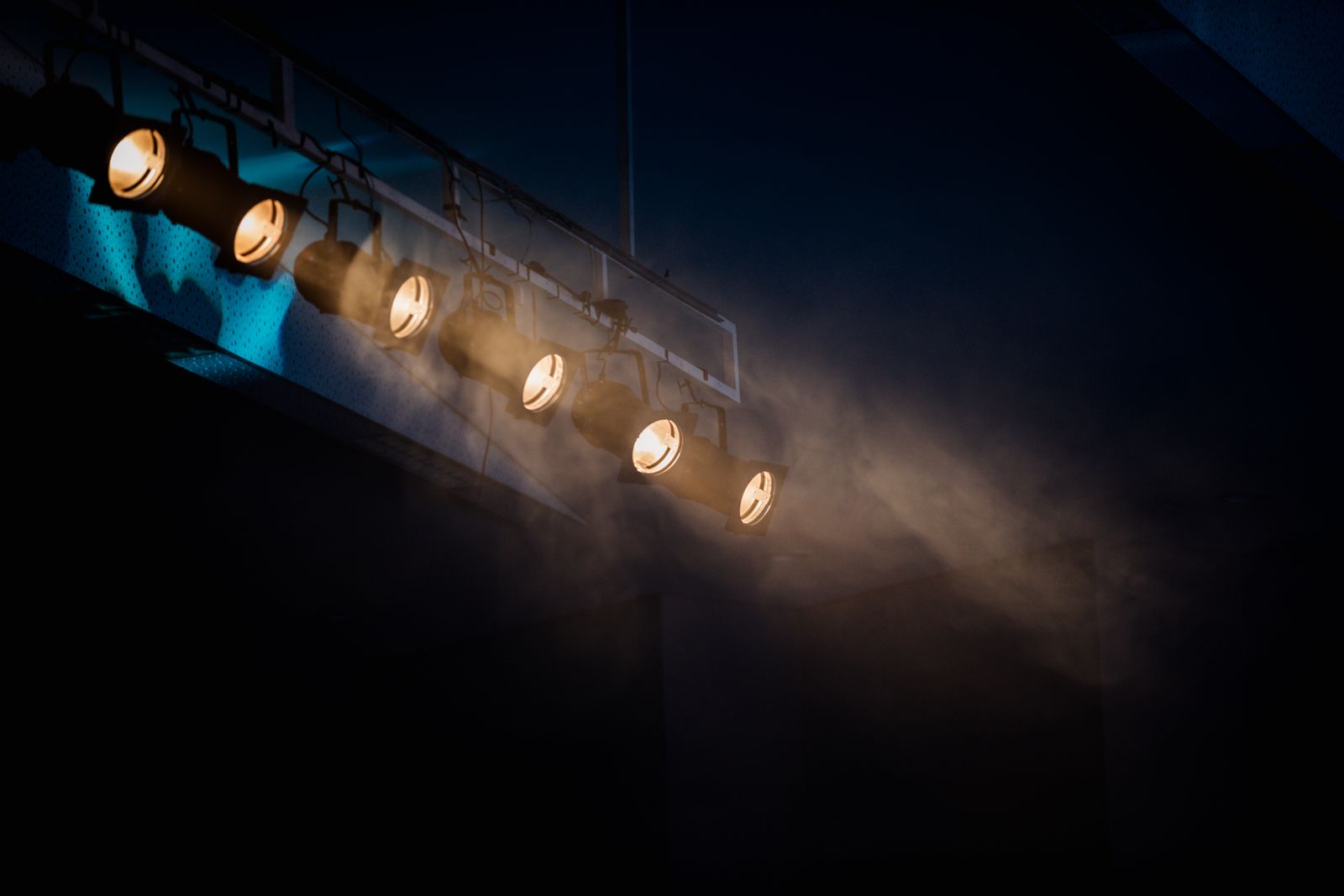
In A Cognitive Theory of Consciousness (1988), Bernard Baars used a theatre metaphor: many specialised processes work backstage, unconsciously and in parallel. Attention acts like a spotlight on a stage; whatever is in the spotlight is broadcast to the whole audience of processes, which can then use it for memory, reasoning, report and action.
The global neuronal workspace
Stanislas Dehaene, Jean-Pierre Changeux and Lionel Naccache turned this into a neural theory. Long-range neurons, dense in prefrontal and parietal cortex, link distant areas into a workspace. A stimulus becomes conscious when its representation is amplified and sustained through these connections, a sudden, all-or-none event they call ignition.
The evidence
- When stimuli hover at the threshold of awareness, consciously seen trials show late, widespread activation that unseen trials lack.
- A late brain wave, the P3b, was long associated with conscious access, though later work showed it can appear without awareness and disappear when no task is required.
- Patients and anaesthesia studies show disrupted long-range communication when consciousness is lost.
Criticisms
Critics argue that GWT explains access, information becoming available for report, rather than experience itself, and that some of its signatures reflect reporting rather than seeing. The prefrontal emphasis is contested by researchers who locate experience mainly in posterior cortex. The 2025 adversarial test against IIT found mixed results for both theories: what it found.
Sources
- Baars, B. (1988). A Cognitive Theory of Consciousness. Cambridge University Press.
- Dehaene, S. & Changeux, J.-P. (2011). Experimental and theoretical approaches to conscious processing. Neuron, 70(2).
- Dehaene, S. (2014). Consciousness and the Brain. Viking.