Home / Mind & brain / Split-brain
Split-Brain Patients: Can Consciousness Be Divided?
When surgeons cut the bridge between the two halves of the brain, each hemisphere can seem to know things the other does not. Sixty years of split-brain research have made this one of the sharpest tests of what it means for consciousness to be unified, and the answer is still disputed.
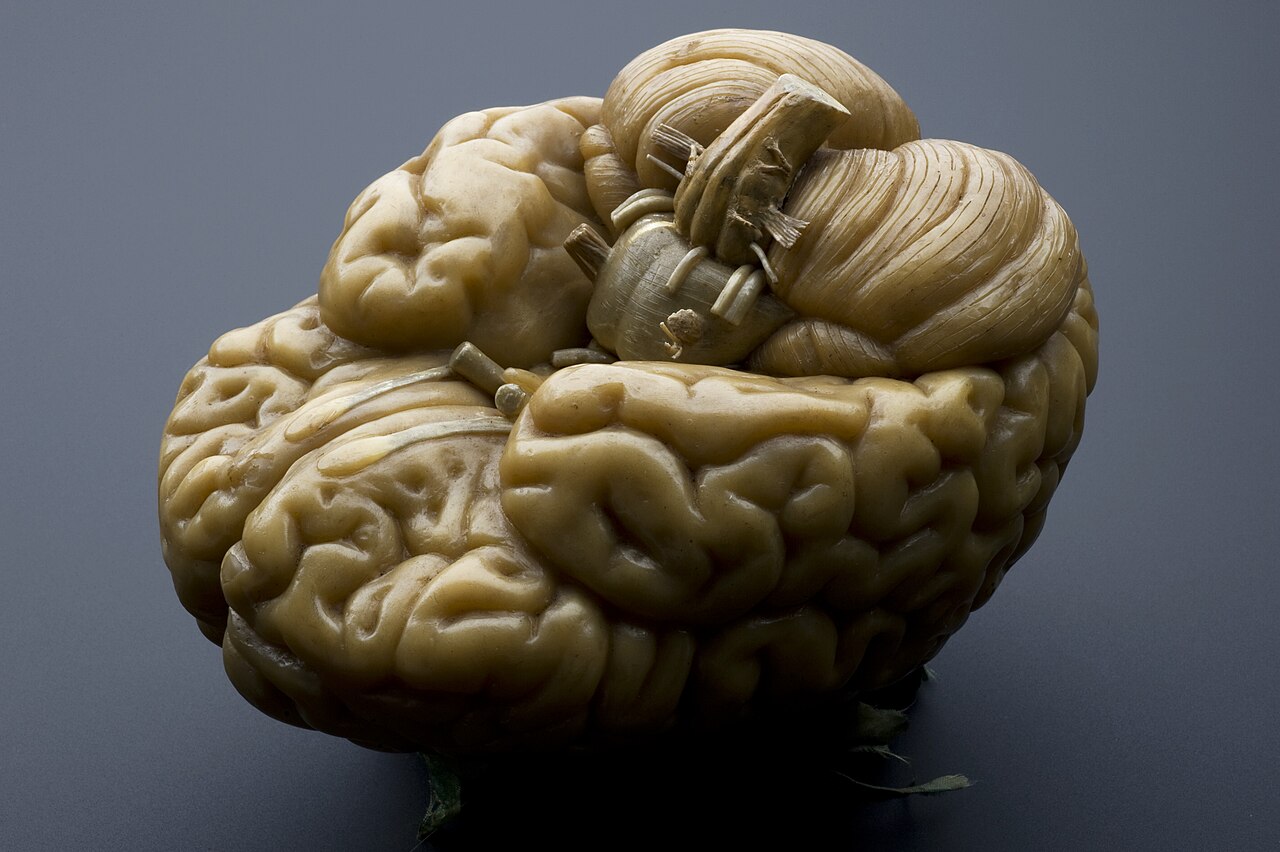
- In split-brain patients the corpus callosum, the main bundle of fibres linking the two cerebral hemispheres, has been cut, usually to control severe epilepsy.
- Laboratory tests show that each hemisphere can process information the other cannot access, and that the left hemisphere tends to invent explanations for actions started by the right.
- Whether this means two conscious minds, one mind with split perception, or something in between is a live debate in neuroscience and philosophy.
- Split-brain cases are evidence about how the brain unifies experience. They do not show that consciousness is quantum, nor that people are “left-brained” or “right-brained”.
Health note: this page is educational. It describes research on patients who underwent brain surgery for epilepsy and is not medical advice. Questions about epilepsy treatment belong with a neurologist or neurosurgeon.
What a “split brain” is
The human cerebrum is divided into a left and a right hemisphere. They are connected by several bundles of nerve fibres called commissures, by far the largest of which is the corpus callosum, a thick band containing on the order of 200 million axons. Through it, the two halves exchange information continuously, so that in everyday life we experience one visual field, one body and one stream of thought.
A “split-brain” patient is someone in whom the corpus callosum (and sometimes other commissures) has been surgically cut, an operation called a corpus callosotomy, or a commissurotomy when more fibres are divided. The deeper structures of the brain, such as the brainstem, remain connected, so both hemispheres still share arousal, sleep–wake cycles and some basic signals. What is lost is most of the direct communication between the two cortical hemispheres.
This matters for consciousness science because of a simple fact of anatomy. Each hemisphere mainly receives information from, and controls, the opposite side of the body. Everything you see to the left of your fixation point goes first to the right hemisphere, and vice versa. In most people, the left hemisphere is also dominant for speech. Cut the bridge, flash a picture briefly to one side, and researchers can address one hemisphere at a time.
The surgery and the first studies
Surgeons first cut the corpus callosum to treat epilepsy in the early 1940s. William van Wagenen and R. Yorke Herren reported a series of patients in 1940, reasoning that seizures might be prevented from spreading from one hemisphere to the other. The neurologist Andrew Akelaitis then examined these patients and, strikingly, found few obvious changes in their behaviour or personality.
The picture changed in the early 1960s. In Los Angeles, the neurosurgeons Joseph Bogen and Philip Vogel performed more complete commissurotomies on patients with intractable epilepsy. At the California Institute of Technology, the neurobiologist Roger Sperry and his doctoral student Michael Gazzaniga designed tests that presented information to one hemisphere at a time. Their first report, on a patient known as W.J., appeared in the Proceedings of the National Academy of Sciences in 1962. In 1981 Sperry shared the Nobel Prize in Physiology or Medicine for his discoveries concerning the functional specialisation of the cerebral hemispheres.
The operation is less common today. Better drugs, other surgical options and devices such as nerve stimulators mean that callosotomy is now reserved mainly for specific forms of severe epilepsy, particularly “drop attacks” that cause sudden falls, and the cut is often partial. As a result, the number of complete split-brain patients available for research is small and shrinking, which is one reason the debate is hard to settle.
The classic findings
The basic experimental set-up is simple. The patient fixes their gaze on a central point while a word or picture is flashed for a fraction of a second to the left or right. Objects can also be placed in one hand, out of sight. Several results became textbook findings Established:
- Naming depends on the side. When a picture is flashed to the right visual field (left hemisphere), the patient names it easily. When it is flashed to the left visual field (right hemisphere), the patient typically says they saw nothing, or guesses.
- The left hand “knows”. Yet when asked to pick out the object by touch with the left hand, which is controlled by the right hemisphere, the patient often chooses correctly, while still being unable to say what it was.
- No cross-comparison. Patients generally cannot judge whether two stimuli, one in each visual field, are the same or different. Information does not seem to pass from one side to the other.
- Different strengths. The left hemisphere usually dominates for language and problem solving with words; the right performs better on some spatial tasks, face recognition and copying drawings.
Outside the laboratory, most split-brain patients behave remarkably normally. They hold conversations, work and recognise themselves as one person. Because people move their eyes and touch things with both hands, information usually reaches both hemispheres anyway, and subcortical routes and external cues (such as hearing what one’s own hand is doing) help to keep behaviour coordinated. Early reports also described episodes of “intermanual conflict”, in which the left hand seemed to work against the right, for example undoing what the other hand had done. Such episodes were usually confined to the months after surgery.
The left-brain “interpreter”
One of the most influential ideas to emerge from this work is Gazzaniga’s concept of the interpreter. In a well-known experiment from the 1970s, a patient was shown a picture of a chicken claw in the right visual field (going to the left hemisphere) and a snowy scene in the left visual field (going to the right hemisphere). From a set of cards, his right hand chose a chicken and his left hand chose a snow shovel. Asked why, the speaking left hemisphere, which had not seen the snow, explained the shovel by linking it to the chicken, for example as something needed to clean out a chicken shed.
Gazzaniga argued that the left hemisphere contains a system that constantly builds a coherent story to explain our behaviour and feelings, even when it lacks the real causes Debated. The interpreter idea is widely discussed far beyond split-brain research, because it fits other findings showing that people confidently give reasons for choices that were in fact influenced by factors they were unaware of, and with research suggesting that many judgements are constructed on the spot, as modelled in quantum probability models of judgement. It links naturally to questions about agency and free will discussed in our page on the Libet experiment. How far the specific lateralised “module” proposed by Gazzaniga exists in the intact brain, however, remains a matter of interpretation.
The 2017 challenge: split perception, unified consciousness?
For decades, the standard summary was that cutting the corpus callosum produces two separate spheres of awareness. In 2017, a team led by Yair Pinto at the University of Amsterdam challenged that view in the journal Brain. They tested two patients with complete, radiologically confirmed callosotomies across many tasks.
As expected, the patients could not compare stimuli presented to the two different visual fields. But, contrary to the textbook picture, they could indicate the presence, location and in many cases the identity of stimuli anywhere in the visual field, whether they responded with the left hand, the right hand or verbally. Their confidence ratings followed the same pattern. The authors concluded that severing the cortical connections splits visual perception but does not produce two independent conscious perceivers in one brain. In a companion review in Trends in Cognitive Sciences, Pinto, Edward de Haan and Victor Lamme described this as “a single conscious agent with split perception”.
The study prompted strong responses. Critics pointed out that it involved only two patients, that long-term patients may have learned subtle strategies to share information between the hemispheres, for instance through small movements or subcortical pathways, and that older studies with different patients found clearer separation. A 2020 review in Neuropsychology Review, co-authored by researchers from several of the opposing camps, including de Haan, Pinto, Tim Bayne, Elizabeth Schechter and Anil Seth, set out the evidence on each side and concluded that the question of whether a split brain houses one or two conscious agents remains open.
One mind or two? The main positions
Philosophers have argued about split brains since Thomas Nagel’s 1971 paper “Brain bisection and the unity of consciousness”, which concluded that none of the obvious answers, one mind or two, fits the data comfortably. The positions on the table today include Debated:
| View | Core claim | Main difficulty |
|---|---|---|
| Two minds | Each hemisphere supports its own stream of consciousness, at least in testing conditions (a view associated with Sperry) | Patients behave and report as one person in daily life |
| One agent, split perception | There is a single conscious subject whose perceptual information is no longer integrated (Pinto and colleagues) | Hard to square with failures to compare stimuli across the midline |
| Switching | One stream of consciousness that switches between hemispheres depending on the task (Tim Bayne’s “switch model”) | Difficult to test directly; may not fit simultaneous responses |
| Partial unity | Some experiences are shared by both hemispheres and others are not | Many philosophers find partially overlapping experiences hard to make sense of |
| Two minds, one person | Two subjects of experience but one person in the social and practical sense (defended by Elizabeth Schechter) | Requires separating “mind” from “person” |
Part of the difficulty is methodological. Consciousness is usually measured through report, and in most patients only the left hemisphere speaks fluently. The right hemisphere’s experience, if it has any of its own, must be inferred from non-verbal responses. This is the same problem of inferring experience from behaviour that arises in studies of anaesthesia and consciousness and in debates about machine consciousness.
What theories of consciousness predict
Split-brain cases are a natural test for the leading scientific theories, and each tends to read them in its own way:
- Integrated Information Theory holds that consciousness corresponds to a maximum of integrated information. If integration within each hemisphere becomes far greater than integration between them, the theory predicts that one conscious system should split into two. IIT therefore leans towards the two-minds view, though how complete the split must be is itself a quantitative question.
- Global Workspace Theory ties consciousness to information being broadcast widely across the cortex. Since each hemisphere has its own frontal and parietal hubs, a divided workspace could in principle support two broadcasts, but the theory is not explicit on this point.
- Higher-order and agent-based views place more weight on a single self-model or a unified capacity for report, which some take to favour the single-agent reading.
None of these predictions has been decisively tested, partly because so few patients are available. And whatever the answer, it would tell us which physical arrangements go with one or two streams of experience, not why there is experience at all: that further question is the hard problem of consciousness.
Left-brain/right-brain myths and quantum claims
Split-brain research is the origin of a popular myth: that people are “left-brained” (logical, analytical) or “right-brained” (creative, intuitive). The real findings concern specialised functions in patients whose hemispheres can no longer communicate. In the intact brain the hemispheres work together on almost every task. A 2013 study by Jared Nielsen and colleagues, which analysed resting-state brain scans from more than 1,000 people, found no evidence that individuals have a generally stronger left- or right-hemisphere network Established.
Split brains also appear in discussions of the unity of consciousness in quantum theories of mind. One motivation for proposals such as Orch OR has been the “binding problem”: how the activity of billions of separate neurons yields a single, unified experience. Some authors have suggested that large-scale quantum coherence could provide that unity. Split-brain findings cut both ways here. They show that unity depends heavily on ordinary anatomical wiring, since cutting a bundle of axons is enough to disrupt it, which is well explained by classical neuroscience. No experiment has shown that quantum effects play a role in hemispheric integration, and these proposals remain Speculative. For the wider debate, see is consciousness quantum? and our explainer on quantum entanglement, a term often misused in this context.
Finally, split-brain cases are sometimes cited as proof that the mind is “nothing but” the brain, or, conversely, as evidence of a soul that survives division. Both readings go beyond the data. The findings show that the organisation of experience depends closely on brain structure, a point that any serious theory, physicalist or not, has to accommodate. Readers interested in non-physical interpretations can compare the arguments in our examination of the “quantum soul” hypothesis.
Evidence Meter
| Claim | Grade |
|---|---|
| After callosotomy, information shown to one hemisphere is often unavailable to the other in laboratory tests | Established |
| The left hemisphere is usually dominant for speech, and can produce confident but incorrect explanations of actions started by the right | Established |
| Split-brain patients function largely normally in everyday life | Established |
| A split brain contains two separate conscious minds | Debated |
| Split-brain patients have one consciousness with split perception | Debated |
| Healthy people are “left-brained” or “right-brained” | Not supported |
| Quantum coherence explains the unity of consciousness that callosotomy disrupts | Speculative |
How to read headlines about “two minds in one head”: ask how many patients were tested, whether the callosotomy was complete, how consciousness was measured (speech, hand responses, confidence ratings) and whether patients could have shared information through other routes. How we grade claims: see the Evidence Meter.
FAQ
Why would anyone have their corpus callosum cut?
The operation is performed to reduce severe epileptic seizures that do not respond to medication, especially seizures that spread rapidly across both hemispheres and cause sudden falls. It is a treatment of last resort and today is often only partial.
Do split-brain patients feel like two people?
Patients generally report feeling like one person, and they live largely normal lives. The divisions between the hemispheres show up mainly in carefully controlled laboratory tasks that send information to one side only.
Is it proven that each hemisphere is separately conscious?
No. Classic studies were often interpreted that way, but more recent work suggests a single conscious agent with divided perception, and other researchers propose intermediate views. The question remains open.
Does split-brain research support quantum theories of consciousness?
No. It shows that the unity of experience depends on ordinary neural connections. Quantum proposals about the unity of consciousness are speculative and have not been tested in split-brain patients.
Sources
- Van Wagenen, W. P. & Herren, R. Y. (1940). Surgical division of commissural pathways in the corpus callosum: relation to spread of an epileptic attack. Archives of Neurology and Psychiatry, 44.
- Gazzaniga, M. S., Bogen, J. E. & Sperry, R. W. (1962). Some functional effects of sectioning the cerebral commissures in man. Proceedings of the National Academy of Sciences, 48.
- Sperry, R. W. (1968). Hemisphere deconnection and unity in conscious awareness. American Psychologist, 23.
- Nagel, T. (1971). Brain bisection and the unity of consciousness. Synthese, 22.
- Gazzaniga, M. S. (2005). Forty-five years of split-brain research and still going strong. Nature Reviews Neuroscience, 6.
- Bayne, T. (2008). The unity of consciousness and the split-brain syndrome. The Journal of Philosophy, 105(6).
- Nielsen, J. A. et al. (2013). An evaluation of the left-brain vs. right-brain hypothesis with resting state functional connectivity magnetic resonance imaging. PLOS ONE, 8(8).
- Pinto, Y. et al. (2017). Split brain: divided perception but undivided consciousness. Brain, 140(5).
- Pinto, Y., de Haan, E. H. F. & Lamme, V. A. F. (2017). The split-brain phenomenon revisited: a single conscious agent with split perception. Trends in Cognitive Sciences, 21(11).
- Schechter, E. (2018). Self-Consciousness and “Split” Brains: The Minds’ I. Oxford University Press.
- de Haan, E. H. F. et al. (2020). Split-brain: what we know now and why this is important for understanding consciousness. Neuropsychology Review, 30(2).
- de Haan et al. (2020), full text on PubMed Central
- The Nobel Prize in Physiology or Medicine 1981: Roger W. Sperry